


My Voice, My Choice
My Voice, My Choice
As feminists, we know that control over our bodies is never given freely, it’s always fought for. That’s why the European Citizens’ initiative “My voice, My Choice”, recently supported by the European Parliament, is important not only for Europe, but for feminist movements worldwide. This initiative shows what happens when women and allies organize across borders to defend reproductive autonomy.
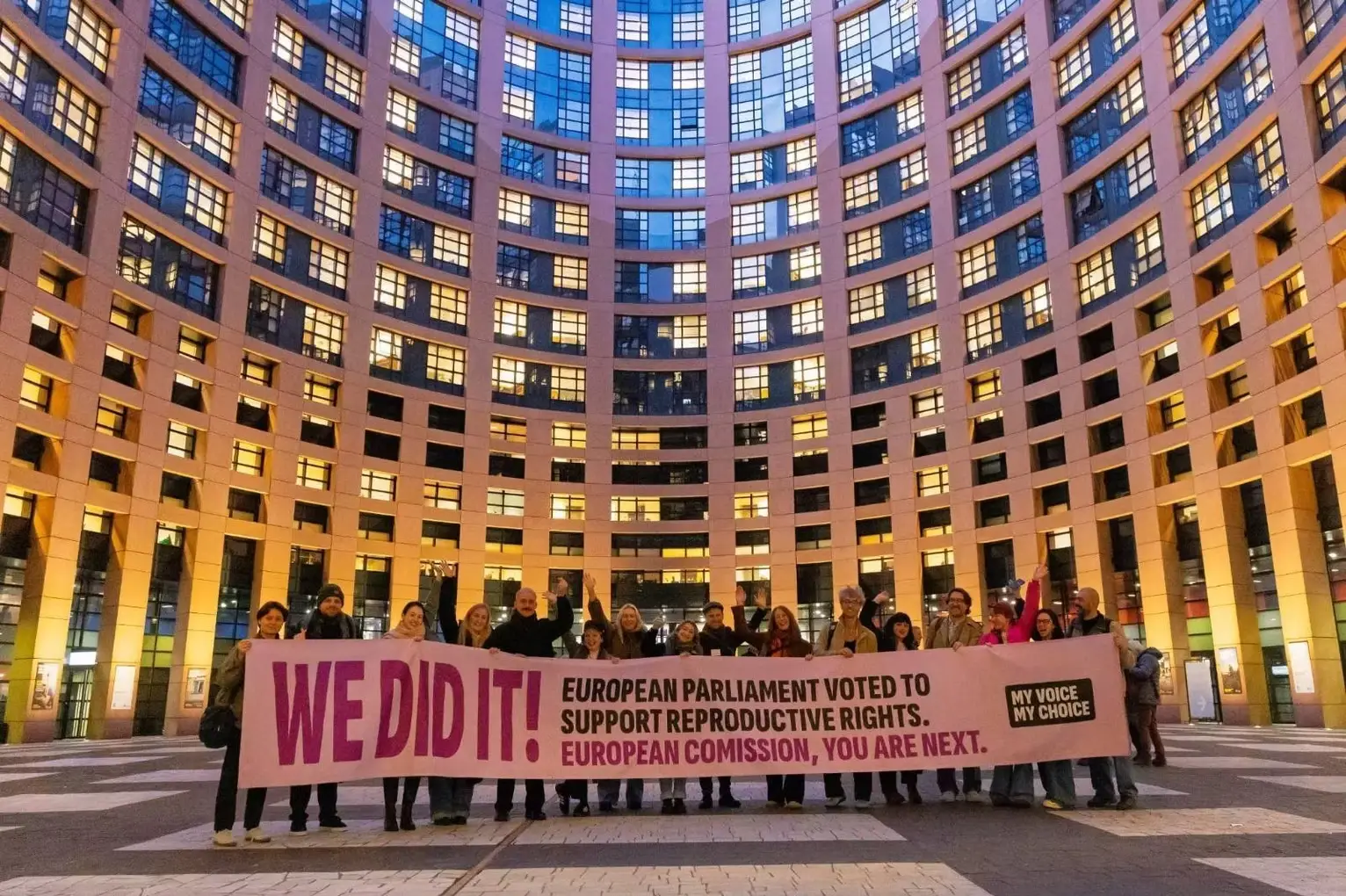
What is “My Voice, My Choice”? It’s a European initiative (ECI) that collected over 1.1 million signatures from people in at least seven EU countries. Its goal is simple but powerful: to make safe and accessible abortion care a real option for everyone, not only for those who are rich, mobile or lucky enough to live in the “right” country. In Europe, abortion may be legal on paper, but in reality many people cannot access it. They face high costs, long travel distances, waiting periods, lack of doctors, or political obstruction. For many, abortion becomes a privilege instead of a right. The initiative asks the European Union to create a financial support mechanism to help people access abortion care when it’s unavailable or unsafe in their own country.
What did the European parliament do? In December 2025, members of the European Parliament voted to support the initiative politically. This vote does not create a law yet, but it sends a strong message: reproductive rights are human rights, and the EU must take responsibility when women’s health and autonomy are denied. The Parliament called on the European commission to respond with concrete action by March 2026. This initiative really matters because it recognizes a truth feminists have always known: legal rights mean nothing without real access. It also matters because it challenges the idea that abortion is a “private” or “national” issue. When states fail to protect women’s bodily autonomy, solidarity across borders becomes necessary.
For those outside Europe this moment is deeply relevant. Around the world, we see the same pattern: governments control women’s bodies, while calling it tradition, morality, or national sovereignty. As part of the 4B movement, which rejects systems built on women’s exploitation, marriage, childbirth, dating, and sexual relationships under patriarchy, this initiative speaks directly to our struggle. Abortion access is not only a medical issue. It’s about refusing compulsory and forced motherhood, refusing sacrifice imposed on women, and refusing a system that treats women’s bodies as resources. Saying no to forced pregnancy is an act of resistance. Conservative and far right politicians opposed this initiative, arguing that the EU should not interfere. But this argument ignores the reality that women suffer when states refuse responsibility.
When abortion is restricted, women do not stop needing abortions, they simply suffer more. The backlash proves exactly why feminist mobilization is necessary. This initiative is not the end of the fight. It’s proof that collective feminist action can enter institutions, force debate, and change the political agenda. For feminists everywhere, “My Voice, My Choice” is a reminder: our struggles are connected, our bodies are political, and our voices matter, when we use them together. ♀






Written by Emily