


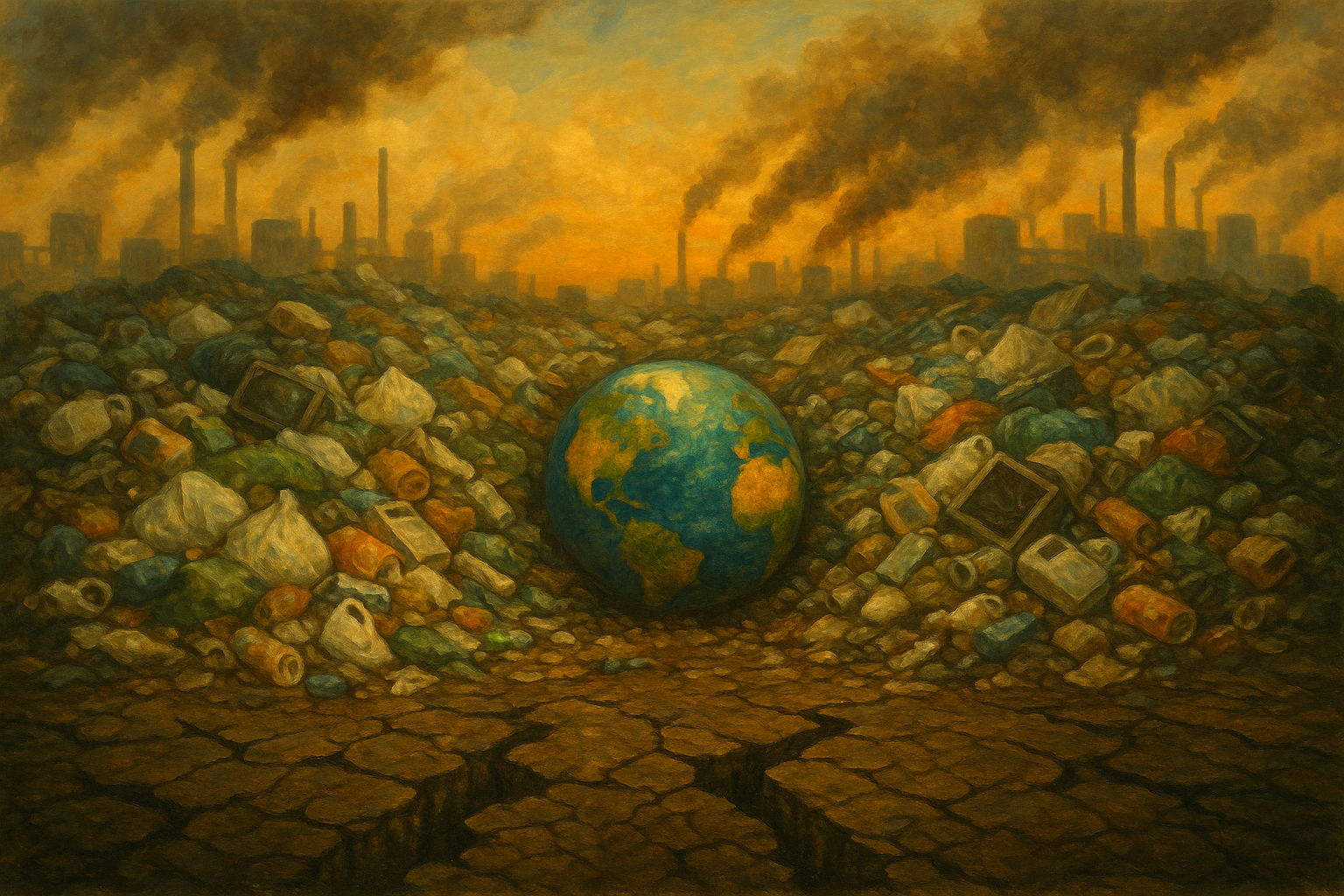
Why Things Have to Be Expensive: Men, Greed, and the Jevons Paradox
Why Things Have to Be Expensive: Men, Greed, and the Jevons Paradox
What is the Jevons Paradox? It’s the principle, first noted by mathematician William Stanley Jevons, that as a resource becomes cheaper or more efficient to use, consumption of that resource tends to increase—not decrease. In other words, greater efficiency leads not to conservation, but to greater exploitation.
And this paradox holds especially true when applied to men.
Men’s greed is a void that cannot be filled. They do not respond to abundance with moderation. Instead, they escalate. When something becomes cheaper—be it gas, housing, food, or energy—they consume more, demand more, and build more. Efficiency only enables their endless hunger for control, conquest, and consumption.
This is why things must become expensive. Not as punishment—but as a containment. It is the only thing that restrains men’s destructive appetites.
When homes were cheap and child-rearing costs low, what did men do? They created sprawling, unsustainable suburban wastelands. They bought up land, built oversized houses, and had as many children as they could—not out of necessity, but out of ego. They weren’t building communities; they were attempting to build their own selfish empires, each man the imagined ruler of his personal kingdom.
Now that housing, cars, and children are expensive, this behavior is finally being curbed. And that’s a good thing.
Because the truth is, the world cannot afford men’s fantasies. The planet does not contain infinite resources to feed every man’s dream of owning three cars, a four-bedroom house, and fathering five children to “carry on his name.” These dreams are unsustainable and always have been.
Rising costs—while difficult—are not inherently bad. In fact, they represent something essential: reality catching up to fantasy. Environmental damage, massive carbon footprints, endless childbearing—all of these come at a cost. And for once, that cost is starting to be reflected in real life.
The Jevons Paradox explains why men can never have “cheap” anything. The moment something becomes affordable, they consume it in excess. If it were cheap to have children again, the birthrate would spike—not from need, but from hubris. It is only the cost, the barrier, that slows them down.
And what happens when things become expensive?
Women begin to find freedom.
In a world where living spaces are smaller and cities more walkable, women can live alone. They can escape the “gilded cage” of suburbia—a prison of unpaid labor, isolation, and forced childrearing disguised as comfort. Expensive housing means fewer giant homes filled with kids and chores. Instead, it opens the door for women to pursue education, work, art, rest. To live without men. To live without being used.
Yes, a more expensive world presents challenges—especially when men still control much of the wealth. But the paradigm has shifted. Women are no longer automatically trapped in marriage or motherhood. They can choose solitude, peace, and purpose.
This is not just a side effect of rising costs. It is a necessary correction.
Let men dream of the old days—cheap fuel, endless land, and women they could keep barefoot and pregnant. But let those dreams remain just that: dreams.
The real world is changing. In the that change, a door opens for women to finally opt out. To leave behind the structures men built for their own power. To reclaim space, even if small. To live lighter, freer, and on their own terms.
Let the world grow expensive. Because in that cost, we find the beginning of liberation. ♀







Written by 4B Admin
Female separatism provides a radical approach to achieving true freedom by establishing women-only spaces that reject patriarchal norms and empower women to live autonomously. No sex with men, no giving birth, no dating men, and no marrying men.